We have feelings and beliefs about what prices should be. These can change, but when prices change faster, it creates problems for us.
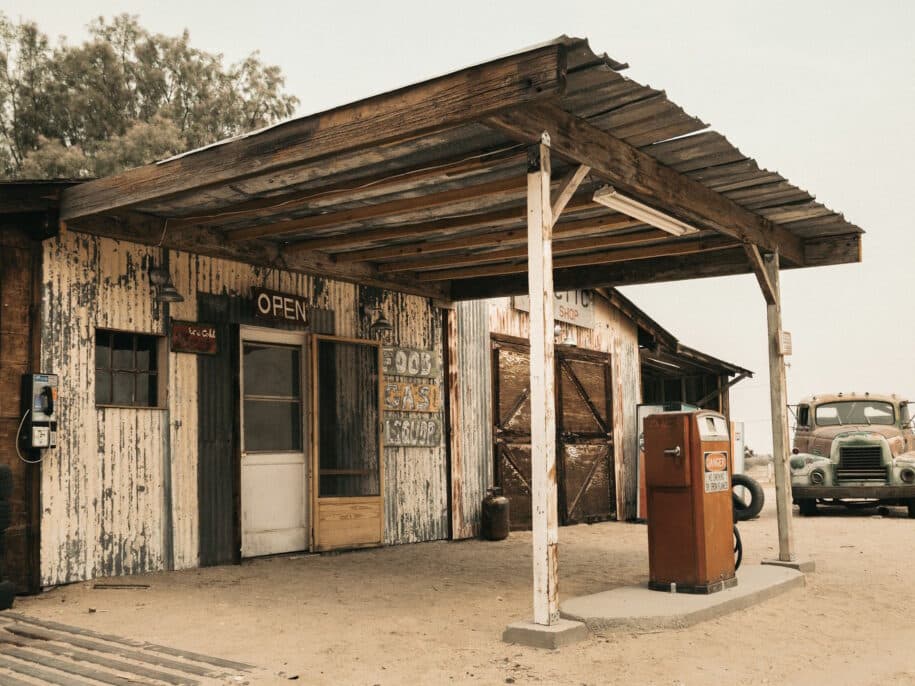
While in college, I worked at a gas station. It was a small one, only four pumps, and retro even for its time. I sat at the till to take cash and give change, and occasionally would saunter out to the full service area to pump someone’s gas.
As work went, it was a pretty good gig. I could study and hang out with friends during the down time.
One time, as I was giving change to an older customer, he mentioned to me, in a confidence, “I remember when gas was 29 cents!”
I gave him a look that was meant to indicate both understanding and sympathy, for gas was way above that then. He left, and that was that.
I’m sure you’ve has times in your life when an older person has come to you and lamented at how things used to be much less expensive. And, depending on your temperament, you either rolled your eyes or sympathized with them. Back then, I couldn’t relate though.
Fast forward to today, and I can very much relate.
I bet you can too. In a way, we’re all that elderly man now. But why is that? Is it just about the rising prices or is there something more at work from the feelings side of things?
15 years ago
I’ve now lived in Portland for 15 years, long enough to have a little bit of memory about the place. And for me, one of the first prices I remember was the Thai food carts downtown. I would get lunch there, and when I first started going, a meal cost $6.
Today, in 2026, the typical Thai food cart price is around $17, sometimes closer to $20. Talking about this makes feel a lot like that man. Have I become old?
Maybe, but I also think it’s because we’ve been living in an unprecedented time of inflationary prices. There’s more to the story here.
Beliefs about prices
If you haven’t thought about it before, I want you consider that prices have value judgments associated with them. Too low. Too high. Just right. Anything that deviates from “just right” is going to feel “off” in some way.
If I tell you that you can buy a car for $500, that’s going to feel off. Similarly, if I tell you that you can buy a hamburger for $500, that’s also going to feel off, but in a totally different way. The price is the same, but the feeling is different.
And that is because prices are context-dependent.
These are beliefs, fundamentally. This thing “should” cost this much. And these beliefs come from a combination of past history and current experience.
If you’re used to paying $500 for a plane ticket, and it now costs $1,000, it’s going to feel “too much”. But if this happens in the context of global geopolitical instability affecting gas prices, it might still feel “too much”, but I bet it’s going to be more normalized in your mind and maybe be a bit more palatable.
Changing beliefs
Beliefs can change, of course. You are talking to a person who was a committed omnivore for the first few decades of his life, before becoming a committed vegetarian.
But in general, beliefs change slowly, not overnight, except in the rarest of circumstances. For example, someone who is rabidly anti-LGBT doesn’t become tolerant just because their loved family member comes out. It happens over time, probably with (in this case at least) some challenge and soul-searching.
I don’t know if any study that gets specific with how fast beliefs over what prices constitute “just right” can change over time. I think that would be very interesting.
What is certain is that the faster prices change, the less likely we are to be able to accept them, and the more likely they will feel “off”.
Relative prices and absolute prices
I often think about that man and the 29 cent gasoline because there’s so much more to the story.
You could still find gas at 29 cents a gallon throughout the 1960s and perhaps even into the early 1970s.

But if we take the year 1960 as a benchmark, that 29 cents translates into $3.38 today. That’s certainly less than what a gallon of gas goes for now, but it’s not crazily different.
So there are two mental maps at work here: absolute price changes and relative price changes.
Was the man lamenting that gas wasn’t 29 cents a gallon in the late 1990’s? Relatively speaking, keeping that price the same in absolute terms would have meant the equivalent of 3 cents in 1960. I don’t think he was lamenting (or expecting) that.
Rather, I think his lament is more of a reflection of the change in absolute number, rather than the change in how the price feels.
Prices rise
And that’s an important distinction. Our inflationary economy requires that prices rise by just a little bit each year. Eventually, the whole purpose of cents won’t be relevant anymore (fractions of a dollar won’t be needed).
But as prices go up, the idea is that so do wages and other balancing factors. At the very least, the hope is that wages rise faster than prices, but in a steady state, these things move in tandem.
But, as we’ve seen from the “Chart of the Century“, this isn’t what’s happening.
And with the current inflation situation, that’s definitely not what’s happening.
Prices are rising too fast
I wouldn’t expect that Thai food cart to be $6 today. But would I expect it to be $20? Not to me, as it “feels” too much, relative to what you get.
What would be the “just right” price? That is different for everyone, of course, but I’d put it at maybe $12. That’s an inflation rate of 15% per year, which is considerable, but still “feels” appropriate.
So, just speaking personally, any food cart meal that costs more than $12 feels like a bit of a rip-off.
And that’s what’s challenging about the current state of inflating prices. It’s not that they are rising, but that they are rising too fast for our belief systems—not to mention wages—to catch up.
(This is one of the reasons why fewer people are buying fast food today.)
Eventually, $20 for a food cart meal won’t feel exorbitant. The question is: what will the price be when that day comes?
Our feelings about prices can change
So on balance, I’d say that I’m not feeling the same as that man in the gas station many years ago. I don’t expect prices to be the same as they were in the 2000s or the 2010s. I just would expect that as prices rise, that wages rise with them, and that maybe everything shouldn’t rise so fast. That doesn’t seem like too much to ask, does it?