Concert ticket prices are higher than ever these days. Why is this, who is responsible, and can anything be done about it?
On the Portland waterfront, near where I go running on a regular basis, a new music venue is being built.
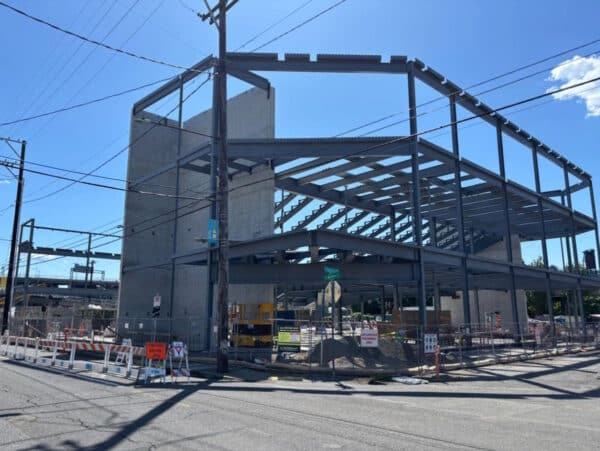
It’s been a contentious process, and there was much opposition to it. This is a venue owned by Live Nation, and there is a lot of worry that this new venue will use the muscle of the monopoly that Live Nation has been determined to be, and push other venues out of business.
Live Nation counters, for what it’s worth, that there are no 4,000 seat venues in the Portland area, and so bands that would normally shoot for one of those venues would skip Portland entirely.
We shall see.
The bigger issue, as I see it, is that all venues may start to struggle, due to the seemingly unsustainable rise in ticket prices.
In short, ticket prices are crazy today.
In an article from 2024, we hear about Rolling Stones tickets averaging $1,200 per person, Bruce Springsteen going for over $5,000 a head, and of course Taylor Swift, whose seats may have started at $49 if you could find them, but soon rose to $7,000.
The average ticket price in 2025 was $133. Why is this happening? Why are ticket prices so high these days?
The way I see it, there are four main culprits for high ticket prices.
Let’s get into it.
Live Nation and Ticketmaster
The ruling came down recently: Live Nation (and Ticketmaster, its subsidiary) were an illegal monopoly in the ticketing market.
And as we all know from basic economics, monopolies drive up prices to consumers. Because where else you gonna go?
This is still an evolving case, and so it’s too early what will become of it, but it’s hard to argue that Live Nation’s business practices have resulted in increased ticket sales for many artists over the years.
The K-shaped economy
You may have heard of the phrase “K-shaped economy”. This slightly confusing moniker refers to the economic situation we find ourselves in today, where the wealthy and comfortable are going from strength to strength, while those on the other side are finding it harder to stay above water, financially.
(Nit pick, but this doesn’t look like a K to me, more like a less-than sign (“<“), or the Japanese hiragana for ku (“く”). Maybe I’ll start calling it the “ku” shaped economy?)
With the richest 10% being responsible for 50% of consumer spending, it’s as if the rest of us don’t even matter, economically speaking.
So in these cases, tickets can be priced high enough that the 1% (or 10%) can afford them, and the rest of us don’t need to be able to afford them.
I don’t know if there is enough intersection between the ultra-wealthy and those who want to see Taylor Swift or Bruce Springsteen and the like, but it certainly doesn’t help push prices down.
Inflation
It’s not just ticket prices, though their price rises are outpacing other forms of entertainment.
Everything is more expensive these days, and much of this is relevant to touring. Fuel costs, labor costs, insurance costs, all are rising.
As shows become spectacles and not just four people on stage with amps and instruments, the costs of putting on a production dwarf what the Grateful Dead were doing with the Wall of Sound back in the 70’s.
And while shows are more expensive to put on, people have less money to spend on experiences like shows. Especially when they are over $100.
You (and Spotify)
Back in the day, artists would tour so that they could sell more albums. Tours made money, of course, but it was the album sales that was really where the big bucks were.
Now, I ask you: when is the last time you bought an album?
Today, the situation is reversed. Because few people buy music, tours are where artists need to make their money. The music promotes the tour now.
Now, this can on one level be seen as a totally rational move by consumers. When Spotify allows you to listen to “anything” for a few bucks a month, that calculation makes a lot of sense. This is even though there are many reasons why you want to cancel Spotify.
Still, this means that you are part of the problem. Sorry.
As long as people don’t support artists in any other way except through touring, they will need to make their money through ticket sales.
As an aside, I wonder how the amount of money that people used to spend on music compares to how much people spend in ticket sales today. It might not be that different in total, just spread around differently.
Support artists
When it comes down to it, if you love an artist, you should support them with your money. Few people are doing this without the need for payment. Buy the album. See the show. Get the merch. Support them on Patreon or whatever platform they’re on. Spread the word.
Otherwise, the only new music we’re going to have to listen to is going to be AI-generated. That to me, is a future worth paying to avoid.