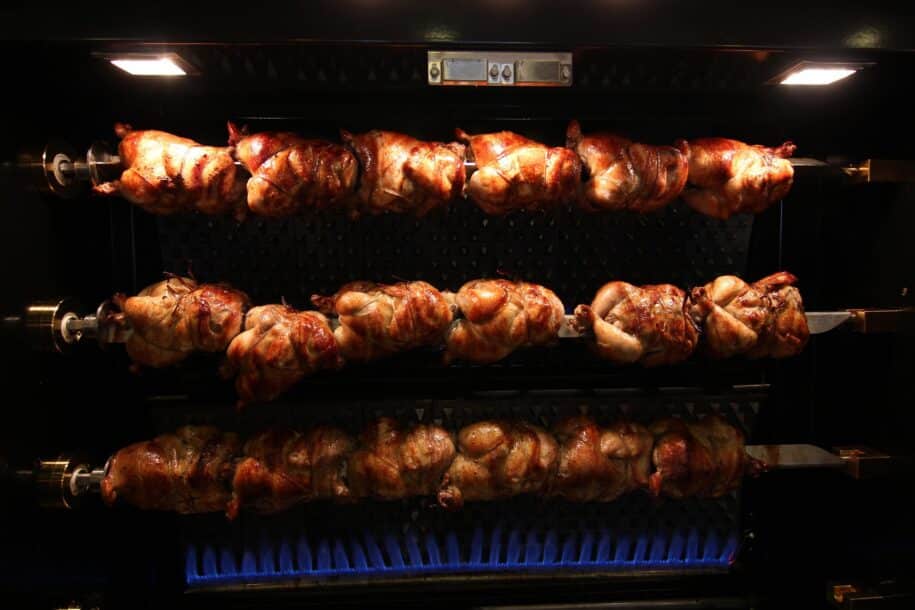
A bill allowing SNAP beneficiaries to buy hot rotisserie chicken highlights the problems that come with restricting what people can buy.
No one appreciates when strings are attached. It takes the idea of a gift and turns it on its head.
This is why I never recommend loaning money, especially not to family or friends. Instead, gift it, or don’t exchange money at all. I’ve seen relationships destroyed over a loan; it’s not worth it.
Unfortunately, that same kind of gift-versus-loan mentality is on full display in our nation’s bizarre and paternal attitude toward food assistance. I’m talking about SNAP benefits (“food stamps”), and the minimal assistance we give the economically challenged.
Two recent news articles, concerning both the left and right, highlight how everyone is doing food assistance wrong, even those with good intentions.
And yes, it regards hot rotisserie chicken.
SNAP benefits review
As a refresher, the Supplemental Nutrition Assistance Program (SNAP) provides money to be used for food for those who are in need.
Eligibility is based on your household size, income, assets, and bills and other considerations. The average monthly benefit for a household is $174 as of 2023.
If you’re not eligible for SNAP (and even if you are), and you don’t have enough money to buy enough food, then we as a country essentially shrug our collective shoulders. You can go try your luck at food banks. I think this attitude is shameful, but even given the constraints of the SNAP benefits, we have other problems.
What is food?
What do we define as food? Sure, bread, eggs, milk, and other staples seem obvious, but what about Cheerios? What about Cookie Crisp? What about Hot Pockets? Or perhaps chewing gum? Or chewing tobacco? What about chewable Vitamin C tablets?
You see the problem. Someone has to decide what counts as food, and those people, unfortunately, are Congress.
On the SNAP website, SNAP eligible food is listed as, “Any food for the household, such as:”
- Fruits and vegetables
- Meat, poultry, and fish
- Dairy products
- Breads and cereals
- Other foods such as snack foods and non-alcoholic beverages
- Seeds and plants, which produce food for the household to eat
It specifically disallows: Alcohol, cigarettes, vitamins, supplements, any hot food, and much else.
These are all choices. Which means they can be changed. And there are two proposed changes happening right now.
We tell you what you can eat
The current administration, which has already stripped $187 billion from the SNAP program, is trying to limit what people can buy with SNAP money.
The Department of Agriculture allowed states (which administer their SNAP programs) to restrict what people could buy with SNAP funds, specifically disallowing soda and candy. The idea being to ensure “taxpayer dollars provide nutritious options that improve health outcomes within SNAP.”
This is, of course, ludicrous, because the second you start to ask whether taxpayers are subsidizing unhealthy behaviors, why stop there? Why not eliminate tax breaks for companies like McDonald’s, Amazon, or Apple, who all are responsible for plenty of unhealthy behaviors?
Anyway, this is currently being litigated, and may not hold up. And it’s noteworthy that of the states that decided to get in on this, most of them were “red states”. Just look at this chart (green means that the restriction on soda and candy was approved):
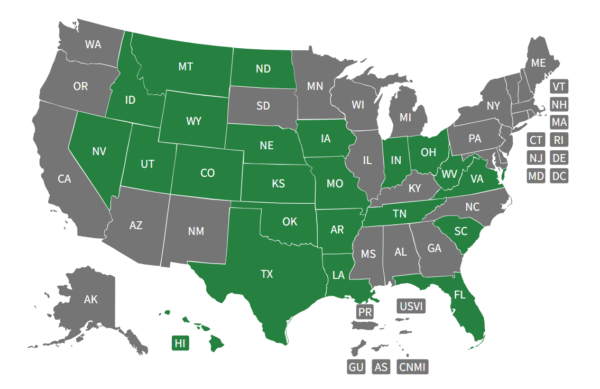
The politics here seem self-evident: government benefits are to be minimized, and people on government benefits are to be more tightly controlled.
Or in other words, “that money is mine, and I decide what you do with it”.
Hot rotisserie chicken
Meanwhile, Democrats have hatched a plan to expand what counts as food. And it’s just as misguided.
A standard tenet of SNAP benefits is: no hot food. This rules out restaurants, pizza places, and other kinds of shops like those.
(An interesting loophole is with places like Papa Murphy’s Pizza, which sell take-and-bake pizzas. SNAP benefits are perfectly fine there, because you heat the food at home.)
But some lawmakers want to change this. Enter John Fetterman, a senator from Pennsylvania.
“America’s best (and delicious) affordability play is Costco’s $4.99 rotisserie chicken. It’s one of my family’s favorites and I’m proud to join this bill…for all to try. SNAP funds would be well spent to feed our nation’s families who need it.”
And, indeed, the text of the bill adds “hot rotisserie chicken” to the original definition of food in the Food and Nutrition Act of 2008.
Why stop here?
Now, I applaud people for wanting to expand what counts under food assistance. The idea that you can’t buy a hot chicken, but can buy it once it’s been cooled down is just silly.
And I understand that Costco’s rotisserie chicken deal is fantastic, and I picture some legislators thinking, “man, everyone should be able to buy this cheap meal.”
(And thankfully, this law change will allow for any hot rotisserie chicken to be purchased, not just Costco, a detail that is often missed.)
Now, perhaps I’m not seeing this in the right light. After all, I’ve been vegetarian for years and have never had Costco’s hot rotisserie chicken, and probably never will.
But, seriously, why is this the cause we’re legislating around? Why hot chicken and not hamburgers? Why not grilled fish? What’s the objection to vegan chicken nuggets? Why is this one thing the hot food that’s okay for SNAP benefits, and nothing else? Doesn’t that seem just a bit arbitrary?
I think what’s going on is the same thing as the waivers preventing soda and candy from being bought with SNAP benefits. It’s the same impulse: this is our money, and we determine what’s okay for you to eat.
And I believe that is wrong. I believe that if you want to give food assistance, you also should be giving it with dignity. And that means allowing people to make the food decisions they want to make. Is it healthy? Is it not? Who gives you the right to make it your business? Because it’s your tax dollars?
Stop it with your tax dollars
We just went to war with Iran and spent something like $113 billion. As part of the cease fire, we may be giving them $300 billion.
The government has given Elon Musk and his companies $38 billion (and counting). Donald Trump has tried to take ownership of plenty of taxpayer money for his aims too, and may still do so.
The entire SNAP food program is around $100 billion annually, and this program helps people stay alive. If you think this is the problem in need of solving, where are your priorities?
Why not SNAP benefits for all?
Here’s a crazy idea: what not give food assistance to all who need or want it? What if we didn’t disallow what food people could buy with food assistance, and guaranteed that everyone would have enough?
Why is that so crazy?
There are nine countries that recognize the right to food as a stand-alone right: Bolivia, Brazil, Ecuador, Guyana, Haiti, Kenya, South Africa, Nepal, and Nicaragua. Why can’t we do that?
Also, in a 2021 United Nations General Assembly, 186 countries voted in favor of recognizing food as a fundamental human right.
Only two countries voted against this. One was Israel; the other was the United States.
Remember, by not guaranteeing food to its citizens, a country is essentially saying, “we don’t care if you die from hunger”.
And I want to believe that we’re better than that.
I look forward to the day when someone who is receiving food assistance can order a pizza—with whatever toppings they want—and no one of any importance can say a word about it.